
Osimert 80 mg contains osimertinib, a targeted cancer medicine belonging to the epidermal growth factor receptor (EGFR) tyrosine kinase inhibitor family. It is used in certain adults with EGFR-mutated non-small cell lung cancer (NSCLC). Unlike traditional chemotherapy, osimertinib is designed to interfere with specific molecular signals that can drive the growth and survival of cancer cells. Its use therefore depends heavily on the genetic characteristics of the tumor and the patient’s clinical situation.

The European Medicines Agency describes osimertinib as an EGFR tyrosine kinase inhibitor used in several NSCLC settings, including certain patients after complete tumor removal and adults with locally advanced or metastatic EGFR-mutated disease. The price of Osimert 80 mg is not necessarily identical across pharmacies or markets. Pack size, local pricing, availability, pharmacy charges, discounts, and regulatory considerations can all influence the final amount. Because this is a prescription cancer medicine, patients should verify current pricing and legitimate availability through a licensed pharmacy or their healthcare team.
What Is Osimert 80 mg?
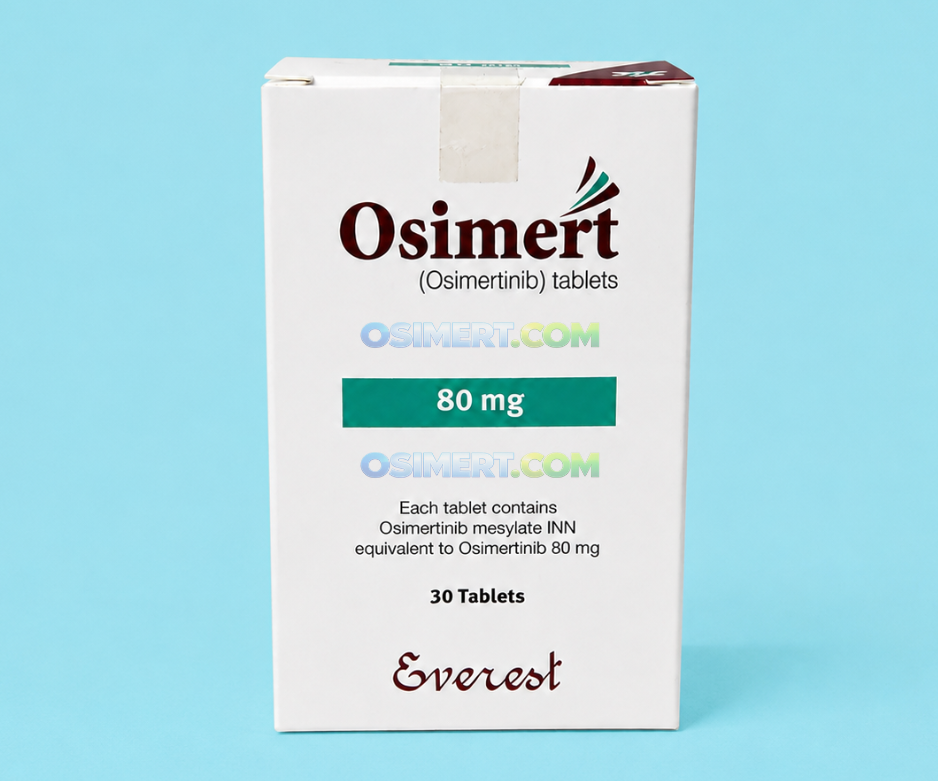
Osimert 80 mg is an oral prescription medicine containing osimertinib. Everest Pharmaceuticals Ltd. is identified as the manufacturer of the Osimert product in Bangladesh-based medicine references. Osimertinib belongs to a group of medicines called EGFR tyrosine kinase inhibitors (TKIs). These medicines work by interfering with signaling pathways that help certain cancer cells grow.
The medicine is not intended for every person with lung cancer. Its suitability depends on factors such as:
- Cancer type
- Cancer stage
- EGFR mutation status
- Previous treatment
- Overall health
- Other medicines being taken
- The treating oncologist’s assessment
Therefore, the presence of lung cancer alone does not establish that osimertinib is appropriate.
What Is Osimertinib?
Osimertinib is the chemical name of the drug substance in Osimert. Osimertinib is a third-generation EGFR tyrosine kinase inhibitor. According to regulatory information, osimertinib is a protein kinase inhibitor that is used for EGFR-mutated non-small cell lung cancer. The development of the drug aimed at inhibition of specific mutant EGFR proteins, but had lower efficacy in inhibiting normal EGFR compared to some other drugs targeting EGFR. The importance of selectivity lies in the role of the EGFR pathway in lung cancer development.
How Does Osimert 80 mg Work?
Osimert 80 mg works due to osimertinib as an active ingredient. In some NSCLC cases, there are mutations of the EGFR gene. They may lead to excessive activation of signaling from the EGFR protein. This process makes cancerous cells to continue growing and surviving. As a result, osimertinib irreversibly connects to specific mutant EGFRs and blocks their action. It disrupts the mechanisms used by cancer cells to ensure their growth. The key idea is that osimertinib does not function just as a substance that fights quickly dividing cells all over the body, as other types of chemotherapy do. Osimertinib acts against the molecular defect present only in cancer cells.
What Is EGFR?
EGFR is an acronym for epidermal growth factor receptor. It is a type of protein that is present in the surface membrane of cells. Normally, the role of EGFR is to signal in processes relating to cell growth and proliferation. However, when there are certain changes in genes, the signals produced by EGFR become abnormal. In cancerous cells, EGFR signaling leads to continuous production of signals for growth.
Which EGFR Mutations Can Osimertinib Target?
Clinically important EGFR alterations include:
Exon 19 deletions
Exon 19 deletion is one of the common activating EGFR alterations associated with sensitivity to EGFR-targeted treatment.
Exon 21 L858R mutation
L858R is another important activating EGFR mutation associated with EGFR-driven NSCLC.
T790M mutation
T790M is a resistance-associated EGFR mutation that can emerge after treatment with earlier-generation EGFR TKIs. Modern regulatory indications for osimertinib extend beyond T790M alone. The EMA lists indications involving EGFR exon 19 deletions, exon 21 L858R mutations, and other activating EGFR mutations in appropriate clinical settings. This distinction matters because some older online product descriptions focus primarily on T790M and do not fully reflect the broader current clinical role of osimertinib.
What Cancer Is Osimert 80 mg Used For?
Osimertinib is used in selected adults with non-small cell lung cancer whose tumors contain appropriate EGFR mutations. Depending on the regulatory jurisdiction and clinical circumstances, approved uses can include:
- Adjuvant treatment after complete surgical removal of certain EGFR-mutated NSCLC
- Locally advanced EGFR-mutated NSCLC that cannot be removed surgically in specified treatment settings
- First-line treatment of certain locally advanced or metastatic EGFR-mutated NSCLC
- Treatment of EGFR T790M mutation-positive locally advanced or metastatic NSCLC in appropriate patients
- Combination treatment with chemotherapy in certain advanced EGFR-mutated NSCLC settings
The exact indication depends on the applicable regulatory approval and the individual patient’s medical circumstances.
Why Is EGFR Testing Important?
Targeted cancer therapies need to be decided based on proper diagnostics. For instance, testing for the existence of an alteration in the tumor in the form of an EGFR mutation would help to see if an EGFR inhibitor could be used. Diagnostics could be done using the tumor tissues and at times, even blood tests depending on the situation at hand. It depends on the circumstances and the healthcare provider. Without appropriate molecular information, it would be impossible to know if a particular therapy targeting EGFR works.
Osimert 80 mg and Other Cancer Treatments
Osimertinib is not automatically a replacement for every other lung cancer treatment.
Depending on the cancer stage and molecular profile, treatment may involve:
- Surgery
- Radiation therapy
- Chemotherapy
- Targeted therapy
- Immunotherapy
- Combination treatment
- Supportive or palliative care
For some patients with advanced NSCLC and EGFR mutation, osimertinib may be used with pemetrexed and platinum-based chemotherapy. The EMA particularly acknowledges this combination for the right first-line setting. The right sequence of treatment should be decided by the oncology team.
Important Safety Considerations
Osimertinib is a potent prescription oncology medicine and should be used under medical supervision. Treatment decisions should consider the patient’s medical history and other medicines.
Important safety areas include:
Lung problems
Osimertinib may lead to serious lung-related adverse effects such as interstitial lung disease or pneumonitis. Difficulty breathing, cough, or any other lung problems should be reported to the healthcare professionals immediately.
Heart rhythm changes
Osimertinib may cause changes to the QT interval, which is an electrical measure of the heart. This is particularly true for individuals who have heart rhythm disturbances or other medications that may impact heart electrical activity.
Heart function
Cardiomyopathy and low heart function are known safety risks. Patients with risk factors for their cardiovascular system need to be monitored while undergoing therapy.
Skin and nail effects
The rash and skin dryness, along with nail disorders, may arise from the use of EGFR-targeted drugs. These side effects need to be brought to the attention of the health care providers if they persist.
Diarrhea
Diarrhea happens to be one of the most common side effects that result from the use of osimertinib. According to the EMA, diarrhea, rash, paronychia, dry skin, and stomatitis are some of the common side effects of osimertinib.
Common Side Effects
Reported adverse effects can include:
- Diarrhea
- Rash
- Dry skin
- Nail inflammation or other nail changes
- Mouth inflammation
- Reduced appetite
- Fatigue
The probability and extent of adverse effects differ from patient to patient. Individuals should not unilaterally decide to withdraw from cancer therapy as a result of an adverse effect. The healthcare professional responsible for treatment will be able to judge what needs to be done.
Serious Reactions Requiring Medical Attention
Some adverse reactions are uncommon but potentially serious.
Medical attention is particularly important if a patient develops:
- New or worsening breathing difficulty
- Persistent cough with concerning respiratory symptoms
- Fainting or significant heart-related symptoms
- Symptoms suggesting an abnormal heart rhythm
- Severe or unusual skin reactions
- Persistent severe diarrhea
- Other sudden or unexplained symptoms
The prescribing healthcare professional should provide individualized safety instructions.
What Can Affect the Price of Osimert 80 mg?
There is no single worldwide price for Osimert 80 mg. The amount charged can vary because of:
Pack size
A medicine supplied as a different number of tablets will naturally have a different total price.
Country and market
Medicine prices can differ considerably between countries because of local regulations, taxes, distribution systems and pharmaceutical pricing.
Pharmacy
Different pharmacies may have different margins, discounts and procurement costs.
Availability
Temporary shortages or limited availability can influence market pricing.
Manufacturer and product registration
The manufacturer, registration status and local supply chain can affect how a medicine is distributed and priced.
Prescription requirements
There could be more professional validation and dispensation processes for cancer medicines that have prescription. For this reason, people ought to verify the latest cost from a registered pharmacy rather than referring to an outdated website.
What Should Patients Check Before Obtaining the Medicine?
Before receiving a prescription medicine such as Osimert 80 mg, patients should discuss the following with their healthcare team:
- Whether EGFR testing has confirmed an appropriate mutation.
- Whether osimertinib is suitable for the patient’s cancer stage.
- Whether previous cancer treatment affects the treatment choice.
- Which other medicines or supplements the patient uses.
- Whether there are heart or lung conditions that require special attention.
- What symptoms should be reported urgently.
- How treatment response will be monitored.
Patients should also check that the product comes through a legitimate pharmaceutical or pharmacy supply chain.
Lifestyle and Supportive Care
Osimertinib is not a substitute for broader cancer care. Patients receiving treatment may benefit from supportive measures recommended by their healthcare team, such as:
- Maintaining adequate nutrition
- Drinking sufficient fluids when medically appropriate
- Remaining physically active according to individual ability
- Attending scheduled oncology appointments
- Following recommended laboratory or cardiac monitoring
- Reporting new symptoms early
- Taking other medicines only after checking for potential interactions
There is no special diet proven to make osimertinib cure cancer. Patients should also be cautious about herbal products or supplements because some can affect prescription medicines.
Osimert vs. Tagrisso: What is the difference?
Tagrisso is the brand name linked to AstraZeneca, whereas Osimert is an osimertinib 80 mg containing drug produced by Everest Pharmaceuticals Ltd. These two brand names belong to drugs with osimertinib as an active ingredient; however, they must not be considered the same branded drug.
| Feature | Osimert 80 mg | Tagrisso |
|---|---|---|
| Active ingredient | Osimertinib | Osimertinib |
| Strength | 80 mg | 80 mg |
| Drug class | EGFR TKI | EGFR TKI |
| Manufacturer/brand | Everest Pharmaceuticals | AstraZeneca |
| Product status | Separate product | Reference/originator brand |
| Prescription medicine | Yes | Yes |
For treatment decisions, patients should follow the product prescribed by their clinician and the applicable regulatory requirements.
How Is Osimertinib Different From Traditional Chemotherapy?
The primary difference lies in the target of the therapy. Regular chemotherapy usually impacts fast-dividing cells. However, targeted drugs like osimertinib target some molecular abnormalities. Osimertinib impacts only particular mutations of the EGFR molecule, which makes molecular testing essential for the therapy’s choice. That does not mean that targeted therapy lacks side effects.
Why Current Medical Information Matters
Older online pages sometimes describe osimertinib mainly as a treatment for T790M-positive disease after earlier EGFR therapy. That description is incomplete when compared with current regulatory information. The EMA currently recognizes several clinical uses for osimertinib involving EGFR-mutated NSCLC, including adjuvant treatment after complete tumor resection and treatment of locally advanced or metastatic disease in appropriate mutation-positive patients. Therefore, patients should rely on current prescribing information and their oncology team rather than assuming that an older product description represents every present-day indication.
Expert Recommendations
Osimert 80 mg should be viewed as a specialized targeted cancer treatment, not as a general lung-cancer medicine.
Before treatment, the most important questions are:
- Has the tumor undergone appropriate EGFR testing?
- Which mutation was identified?
- What is the stage of the cancer?
- Is the treatment being used before or after another therapy?
- Are there relevant heart or lung conditions?
- Could another medicine interact with osimertinib?
- What monitoring has the oncology team recommended?
These questions provide a much more reliable basis for treatment decisions than price alone.
Conclusion
Osimert 80 mg is a formulation of osimertinib, which is a tyrosine kinase inhibitor of EGFR for certain cases of EGFR mutation-positive non-small cell lung cancer. The drug acts by inhibiting the abnormal signals of EGFR to inhibit tumor cell growth and proliferation. The application of this drug has extended beyond the initial use in the setting of T790M-positive cases.
The price of Osimert 80 mg may change based on country of purchase, pharmacy of purchase, packaging, availability and other market forces. As Osimert is an oncology drug that needs a doctor’s prescription, it is important for patients to check information about the drug and costs through an authorized pharmacist or healthcare professional. The most important thing about Osimertinib, however, is that it must only be taken if the cancer characteristics justify taking it.