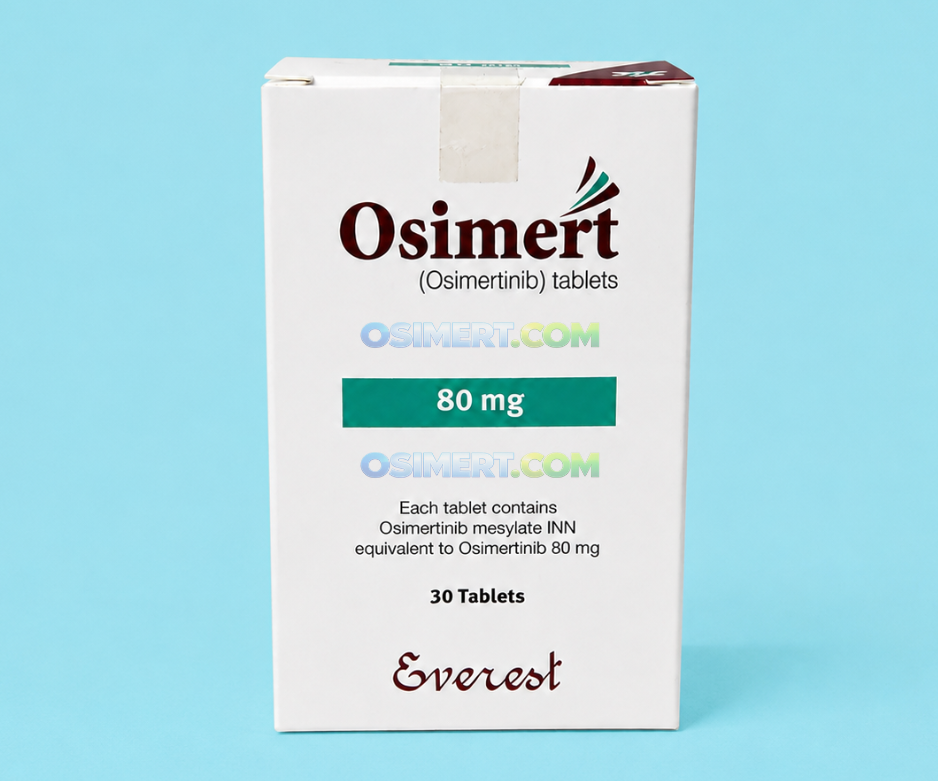
Osimert 80 mg (Osimertinib)
Disclaimer: Before purchasing any medicine, always verify whether there is a valid drug license.
Osimert 80 mg is identified on this website as a product containing osimertinib, an oral targeted anticancer medicine belonging to the epidermal growth factor receptor (EGFR) tyrosine kinase inhibitor class.
Osimertinib is used in selected adults with non-small cell lung cancer (NSCLC) whose tumors contain specific EGFR alterations. The appropriate indication depends on the tumor’s molecular characteristics, disease stage, previous treatment, combination therapy and the regulatory requirements applicable in the country where treatment is provided.
The specific manufacturer, marketing authorization holder and regulatory status of the Osimert-branded product should be confirmed from the product packaging and applicable regulatory documentation.
Everest Pharmaceuticals Ltd. About the Manufacturer
Everest Pharmaceuticals Ltd. is a pharmaceutical manufacturer based in Bangladesh. The company is involved in the development, production, and marketing of pharmaceutical products, including medicines used in specialized therapeutic areas.
Everest Pharmaceuticals focuses on manufacturing quality medicines for the healthcare market and offers a range of products, including treatments used in oncology and other medical fields. Its product portfolio includes various generic medicines formulated for patients and healthcare providers.
Company Name: Everest Pharmaceuticals Ltd.
Industry: Pharmaceutical Manufacturing
Country: Bangladesh
Business Activities: Manufacturing, marketing, and distribution of pharmaceutical products
Product Areas: Includes specialized and general pharmaceutical medicines
Quality Focus: Product manufacturing and quality-control processes are intended to support medicine quality, safety, and regulatory compliance.
For product-specific information, it is important to check the official packaging, product insert, batch details, and manufacturer information, as formulations and regulatory status may vary by product and market.
Head Office: Everest Pharmaceuticals Ltd. is located at Rahman’s Regnum Centre (10th & 11th floor), 191/1 Tejgaon Commercial Area, Dhaka-1208, Bangladesh.
Manufacturing Plant: Everest Pharmaceuticals Limited B-33, 45 & 46, BSCIC, Kanchpur, Narayanganj–1430, Bangladesh
| Information | Details |
|---|
| Product name | Osimert |
| Active ingredient | Osimertinib |
| Strength | 80 mg |
| Dosage form | Tablet, subject to product documentation |
| Route | Oral |
| Drug class | EGFR tyrosine kinase inhibitor |
| Therapeutic area | Oncology |
| Main disease area | Non-small cell lung cancer |
| Product manufacturer | Everest Pharmaceuticals Ltd., Bangladesh, as identified in the supplied product information |
| Reference/originator product | Tagrisso (osimertinib) |
| Reference/originator company | AstraZeneca |
| Original developer | AstraZeneca |
| Prescription status | Prescription anticancer medicine |
| Key biomarker | EGFR alterations, depending on indication |
What is osimertinib?
Osimertinib is an oral, third-generation, irreversible EGFR tyrosine kinase inhibitor.
EGFR is a receptor involved in signaling pathways that can regulate cell growth and survival. Certain activating EGFR alterations can drive the growth and progression of NSCLC.
Osimertinib is designed to inhibit mutant forms of EGFR, including clinically important alterations such as EGFR exon 19 deletions, exon 21 L858R mutations and the EGFR T790M resistance mutation, depending on the treatment setting.
Because osimertinib targets specific molecular abnormalities, molecular testing is an important part of determining whether a patient may be eligible for treatment.
The FDA’s original U.S. approval of Tagrisso occurred in 2015, initially for metastatic EGFR T790M mutation-positive NSCLC after progression on or following EGFR TKI therapy.
What is Osimert 80 mg used for?
Osimertinib is used in several EGFR-mutated NSCLC treatment settings. Approved indications differ between countries and can change as regulatory authorities review new clinical evidence.
Depending on the applicable authorization, osimertinib may be used for:
- Certain patients with EGFR-mutated NSCLC after complete tumor resection as adjuvant treatment.
- Certain patients with locally advanced, unresectable stage III EGFR-mutated NSCLC following definitive chemoradiation.
- First-line treatment of selected patients with locally advanced or metastatic EGFR-mutated NSCLC.
- Selected patients with metastatic EGFR T790M mutation-positive NSCLC following progression on an EGFR tyrosine kinase inhibitor.
- First-line osimertinib in combination with platinum-based chemotherapy for certain patients with locally advanced or metastatic EGFR-mutated NSCLC.
For example, the FDA approved osimertinib with platinum-based chemotherapy in February 2024 for certain patients with locally advanced or metastatic NSCLC containing EGFR exon 19 deletions or exon 21 L858R mutations.
The FDA subsequently approved osimertinib in September 2024 for certain adults with unresectable stage III EGFR exon 19 deletion- or exon 21 L858R-positive NSCLC after platinum-based chemoradiation.
A patient’s eligibility cannot be determined from the product name alone. Tumor testing, disease stage, previous treatment and the applicable local prescribing information must all be considered.
Osimert and Tagrisso
Osimert contains the active ingredient osimertinib.
Tagrisso is the established reference/originator brand associated with osimertinib and AstraZeneca. FDA records identify AstraZeneca Pharmaceuticals as the sponsor of osimertinib’s original U.S. approval, while AstraZeneca’s own materials identify Tagrisso as its osimertinib medicine.
Osimert should not automatically be described as identical to Tagrisso merely because both products contain osimertinib.
The following may differ between products:
- Manufacturer
- Brand owner
- Marketing authorization holder
- Manufacturing site
- Excipients
- Packaging
- Regulatory authorization
- Distribution arrangements
- Country-specific product information
Therefore, product-specific documentation should be used when describing Osimert.
Originator and reference product
Who developed osimertinib?
AstraZeneca developed osimertinib and brought it to market under the brand name Tagrisso.
FDA records show AstraZeneca Pharmaceuticals as the sponsor associated with osimertinib’s original U.S. approval. Tagrisso received its initial U.S. approval in November 2015.
AstraZeneca’s European announcement also identified Tagrisso as AZD9291 (osimertinib) and described the 80 mg once-daily tablet authorization in the European Union in 2016.
Who first manufactured osimertinib?
For website purposes, it is more accurate to distinguish originator/developer, reference-product manufacturer, and manufacturer of a particular generic or alternative branded product.
The documented originator/reference product is Tagrisso, developed and marketed by AstraZeneca. AstraZeneca was therefore the company responsible for the originator medicine’s development and initial commercial introduction.
However, the fact that AstraZeneca developed and marketed Tagrisso does not establish that AstraZeneca manufactures every osimertinib product sold worldwide.
For Osimert 80 mg specifically, the supplied product information identifies Everest Pharmaceuticals Ltd. in Bangladesh as the manufacturer. This product-specific manufacturing claim should be checked against the current packaging, official manufacturer documentation and applicable regulatory records before publication.
How does osimertinib work?
Osimertinib works by inhibiting EGFR tyrosine kinase signaling.
Certain EGFR mutations can cause abnormal signaling that encourages cancer cells to grow and survive. Osimertinib binds irreversibly to mutant EGFR and interferes with signaling associated with these cancer-driving alterations.
EGFR mutations
Important EGFR alterations relevant to osimertinib treatment include:
- EGFR exon 19 deletions
- EGFR exon 21 L858R mutations
- EGFR T790M resistance mutation
The exact mutation requirement depends on the treatment indication.
Why T790M matters
The EGFR T790M mutation can contribute to resistance to earlier-generation EGFR tyrosine kinase inhibitors.
Osimertinib was initially developed as a targeted treatment capable of inhibiting mutant EGFR, including T790M, while maintaining activity against important activating EGFR mutations.
Central nervous system activity
Osimertinib has clinically relevant central nervous system activity. This is particularly important in EGFR-mutated NSCLC because the disease can involve the brain and other areas of the central nervous system.
Treatment decisions involving brain metastases should be made by the treating oncology team according to the applicable indication and clinical circumstances.
Osimert 80 mg dosage and administration
The appropriate osimertinib dose depends on the indication and applicable regulatory labeling.
For several approved adult indications, the standard osimertinib dose is 80 mg orally once daily.
However, dosage should not be individualized solely from information on this website.
Dose modification or treatment interruption may be required for certain adverse reactions or clinical circumstances.
General administration principles
- Take osimertinib exactly as prescribed.
- Follow the dosing schedule provided by the treating healthcare professional.
- Do not independently increase or decrease the dose.
- Do not stop treatment without discussing it with the treating healthcare professional.
- Take the medicine consistently at approximately the same time each day.
- Follow the applicable official product information concerning food and administration.
- Tell the healthcare professional about other medicines being used.
The original U.S. Tagrisso labeling identified 80 mg once daily as the recommended dosage for its initial approved indication.
Missed dose
If a dose of osimertinib is missed, patients should follow the instructions in the applicable current prescribing information.
Do not take an extra dose unless specifically instructed by a healthcare professional.
Because instructions can depend on the product labeling and circumstances surrounding the missed dose, the official patient information supplied with the medicine should be consulted.
Available strength
Osimertinib has been marketed in different strengths depending on jurisdiction and product.
The reference product Tagrisso has been marketed as 40 mg and 80 mg tablets. AstraZeneca’s European authorization announcement identified both 40 mg and 80 mg once-daily tablets.
For this website, Osimert 80 mg is identified as the 80 mg product.
| Strength | Active ingredient |
| Osimert 80 mg | 80 mg osimertinib |
The exact dosage form, packaging and commercial presentation of Osimert should be confirmed against the product’s official documentation.
What are the side effects of osimertinib?
Osimertinib can cause adverse reactions ranging from relatively common effects to potentially serious complications.
Commonly reported adverse reactions may include:
- Diarrhea
- Rash
- Dry skin
- Nail changes or nail toxicity
- Reduced appetite
- Fatigue
- Muscle or joint symptoms
- Mouth inflammation
- Cough
- Nausea
The frequency and severity of adverse reactions can vary according to treatment setting, combination therapy, treatment duration and individual patient characteristics.
The original FDA Tagrisso label identified diarrhea, rash, dry skin and nail toxicity among the most common adverse reactions.
Important safety information
Osimertinib can cause serious adverse reactions and requires appropriate medical supervision.
Important safety considerations include:
Interstitial lung disease and pneumonitis
Osimertinib can cause inflammation or injury of lung tissue. New or worsening respiratory symptoms should be promptly evaluated.
QT interval prolongation
Osimertinib can prolong the QT interval, potentially increasing the risk of abnormal heart rhythms in susceptible patients.
Cardiomyopathy
Reduced heart function has been reported. Appropriate patients may require cardiac monitoring during treatment.
Keratitis and eye disorders
Eye-related adverse reactions can occur. Significant eye pain, redness, vision changes or other concerning symptoms should be evaluated by a healthcare professional.
Skin and nail reactions
Rash, dry skin and nail changes are recognized adverse effects.
Diarrhea
Diarrhea is common and can become clinically significant if severe or prolonged.
Embryo-fetal toxicity
Osimertinib may cause fetal harm. Pregnancy and reproductive considerations should be discussed with an appropriate healthcare professional before treatment.
Other serious reactions
The applicable prescribing information should be consulted for the complete list of warnings, precautions and adverse reactions.
Osimertinib and pregnancy
Osimertinib may cause fetal harm.
Patients who are pregnant, planning pregnancy or who could become pregnant should discuss the risks and appropriate contraception requirements with their healthcare professional.
Pregnancy-related recommendations can differ depending on sex, reproductive potential, treatment combination and applicable regulatory labeling.
Do not make reproductive-health decisions based solely on website information.
Osimertinib and breastfeeding
Osimertinib treatment may require interruption or avoidance of breastfeeding depending on the applicable prescribing information.
The original U.S. Tagrisso labeling instructed patients not to breastfeed during treatment.
Patients should consult the current local prescribing information and their healthcare professional for the most appropriate recommendation.
Drug interactions
Osimertinib can interact with other medicines.
Particular attention may be required with medicines that influence CYP3A activity or medicines that can themselves affect cardiac rhythm or the QT interval.
The original FDA labeling specifically addressed strong CYP3A inhibitors and strong CYP3A inducers.
Patients should provide their healthcare professional with a complete list of:
- Prescription medicines
- Non-prescription medicines
- Vitamins
- Herbal products
- Supplements
Do not start or stop another medicine without professional advice when receiving osimertinib.
Monitoring during treatment
Monitoring depends on the patient’s diagnosis, treatment regimen and clinical history.
Healthcare professionals may assess:
- Tumor response
- EGFR mutation status
- Symptoms and treatment tolerance
- Lung function or respiratory symptoms when clinically indicated
- Cardiac function
- Electrocardiogram findings when appropriate
- Electrolytes
- Liver function
- Other laboratory parameters based on the treatment setting
The precise monitoring plan should be determined by the treating oncology team.
Clinical information
Osimertinib has been evaluated extensively in EGFR-mutated NSCLC.
Clinical development has included studies evaluating:
- First-line treatment of advanced EGFR-mutated NSCLC
- Treatment of EGFR T790M-positive disease after previous EGFR TKI therapy
- Adjuvant treatment following surgical resection
- Combination therapy with platinum-based chemotherapy
- Treatment following definitive chemoradiation in unresectable stage III EGFR-mutated NSCLC
The FDA’s 2024 approval of osimertinib plus platinum-based chemotherapy was based on the FLAURA2 study, which enrolled patients with EGFR exon 19 deletion or exon 21 L858R mutation-positive locally advanced or metastatic NSCLC.
The 2024 approval for unresectable stage III disease followed results from the LAURA study.
Clinical-trial results should not be interpreted as a prediction of an individual patient’s response.
Osimertinib and EGFR testing
Osimertinib is a biomarker-directed treatment.
Before using osimertinib for an indication requiring an EGFR alteration, appropriate molecular testing is generally necessary to establish whether the tumor contains the relevant biomarker.
Depending on the indication, testing may evaluate:
- EGFR exon 19 deletions
- EGFR exon 21 L858R alterations
- EGFR T790M
- Other EGFR alterations specified by the applicable regulatory indication
FDA companion-diagnostic information identifies EGFR biomarkers relevant to Tagrisso treatment.
A negative blood-based test does not necessarily exclude a tumor alteration in every clinical circumstance, so the treating team may determine whether tissue-based testing is appropriate.
Osimert versus conventional chemotherapy
Osimertinib is generally classified as a targeted anticancer therapy, specifically an EGFR tyrosine kinase inhibitor.
It is different from conventional cytotoxic chemotherapy because it is designed to target specific molecular signaling associated with EGFR-driven cancer.
However, osimertinib can also be used in combination with platinum-based chemotherapy for certain patients with EGFR-mutated NSCLC under applicable regulatory indications.
Everest Pharmaceuticals Ltd. Product Verification Process
To verify the authenticity of an Everest Pharmaceuticals product, follow the verification process below:
Scan the QR Code: Scan the QR code printed on the product box.
The QR code will direct you to the official product verification page.
The QR code will direct you to the Everest Pharmaceuticals Ltd. E-Verification page, where you can complete the product verification process.
Open the Box: After accessing the verification page, open the product box and locate the verification code printed on the bottle.
Submit the Verification Code: Enter the verification code from the bottle on the verification page and submit it to check the product’s authenticity.
Verification Success: If the verification is successful, the product is confirmed as legitimate.
Verification Error: If the system displays a verification error, the product may be counterfeit or unauthorized. Do not use the product until its authenticity has been confirmed through an appropriate official channel.
Counterfeit Products: If a product is confirmed to be fake, do not use or distribute it. Report the suspected counterfeit product and supplier to the appropriate regulatory authorities, such as the Directorate General of Drug Administration (DGDA) in World, and take appropriate legal action against the supplier through the relevant authorities.
Important: Always purchase medicines from licensed pharmacies or authorized suppliers and verify suspicious products before use.
Osimert manufacturer information
For this website, Osimert 80 mg is identified as being manufactured by Everest Pharmaceuticals Ltd. in Bangladesh, based on the supplied product information.
This product-specific statement should be verified against current packaging and official manufacturer or regulatory documentation before publication.
It is important to distinguish this manufacturer information from the originator history of osimertinib.
Originator
AstraZeneca developed osimertinib and introduced it as Tagrisso.
Reference product
Tagrisso (osimertinib) is the established originator/reference brand.
Osimert product manufacturer
Everest Pharmaceuticals Ltd., Bangladesh, according to the supplied product information.
Why these distinctions matter
The company that developed a medicine is not necessarily the company that manufactures every product containing the same active ingredient.
A pharmaceutical product may have separate entities for:
- Original developer
- Originator manufacturer
- Generic manufacturer
- Brand owner
- Marketing authorization holder
- Distributor
- Supplier
These roles should not be presented as interchangeable.
Medical information disclaimer
Osimert 80 mg is a prescription anticancer medicine.
The information on this website is intended for general educational purposes and does not replace professional medical advice, diagnosis, prescribing information or individualized treatment.
Patients should not start, stop, increase or decrease osimertinib based solely on information published online.
Approved indications, dosage recommendations, warnings, formulations and regulatory requirements may differ between countries and may change over time.
Always consult the latest official product information and an appropriately qualified healthcare professional.
Frequently Asked Questions
What is Osimert 80 mg?
Osimert 80 mg is identified on this website as an 80 mg product containing osimertinib, an EGFR tyrosine kinase inhibitor used in selected patients with EGFR-mutated NSCLC.
What is osimertinib used for?
Osimertinib is used in selected EGFR-mutated NSCLC treatment settings, including certain early-stage, locally advanced and metastatic disease settings depending on the applicable regulatory authorization.
Is Osimert the same as Tagrisso?
Osimert and Tagrisso contain the same active ingredient, osimertinib, but they are different branded products. Tagrisso is the originator/reference product associated with AstraZeneca.
Who developed osimertinib?
AstraZeneca developed osimertinib and introduced it as Tagrisso. FDA records identify AstraZeneca Pharmaceuticals as the sponsor of the original U.S. approval.
Who manufactures Osimert 80 mg?
The supplied product information identifies Everest Pharmaceuticals Ltd. in Bangladesh as the manufacturer of Osimert 80 mg. This product-specific information should be confirmed against current official documentation.
What is the reference product for osimertinib?
The major reference/originator product is Tagrisso, developed and marketed by AstraZeneca.
Is osimertinib a chemotherapy medicine?
Osimertinib is a targeted anticancer medicine and EGFR tyrosine kinase inhibitor rather than conventional cytotoxic chemotherapy.
How does osimertinib work?
Osimertinib irreversibly inhibits mutant EGFR signaling, including clinically important EGFR alterations relevant to NSCLC treatment.
What is EGFR?
EGFR, or epidermal growth factor receptor, is a cell-surface receptor involved in signaling pathways that regulate cell growth and survival. Certain EGFR alterations can drive NSCLC.
What EGFR mutations are relevant to osimertinib?
Depending on the indication, clinically relevant alterations include EGFR exon 19 deletions, exon 21 L858R mutations and T790M.
Is EGFR testing required?
For biomarker-defined indications, molecular testing is important to establish whether the tumor contains the relevant EGFR alteration.
How often is osimertinib taken?
For several approved adult indications, osimertinib is administered orally once daily. The exact regimen depends on the indication and applicable prescribing information.
What is the usual osimertinib strength?
Osimertinib has been marketed in 40 mg and 80 mg tablet strengths in the reference product. Osimert 80 mg is identified here as an 80 mg product.
What are common side effects of osimertinib?
Common adverse reactions can include diarrhea, rash, dry skin, nail changes and fatigue.
Can osimertinib cause heart problems?
Yes. Cardiac effects, including QT interval prolongation and cardiomyopathy, are important safety considerations.
Can osimertinib cause lung problems?
Yes. Interstitial lung disease and pneumonitis are important potential adverse reactions requiring prompt evaluation of concerning respiratory symptoms.
Can osimertinib be used during pregnancy?
Osimertinib may cause fetal harm. Pregnancy and reproductive considerations should be discussed with a healthcare professional before treatment.
Can patients breastfeed while taking osimertinib?
The original U.S. Tagrisso labeling advised against breastfeeding during treatment. Patients should follow the current applicable prescribing information.
Can osimertinib be taken with other medicines?
Potential drug interactions exist. Patients should provide their healthcare professional with a complete medication and supplement list.
Can the osimertinib dose be changed?
Dose interruption or modification may be required for certain adverse reactions. Dose changes should only be made according to the treating healthcare professional’s instructions.
Does osimertinib work for everyone with lung cancer?
No. Osimertinib is a biomarker-directed treatment and is intended for specific NSCLC populations defined by EGFR alterations and treatment setting.
Does osimertinib work against brain metastases?
Osimertinib has clinically relevant central nervous system activity, but management of brain metastases must be individualized by the oncology team.
What should I do if I miss a dose?
Follow the current patient information supplied with the product or contact the treating healthcare professional. Do not take an additional dose unless instructed.
Is Osimert a generic product?
The term “generic” should only be used when supported by the applicable regulatory classification. Osimert contains the same active ingredient as Tagrisso, but its exact regulatory status and relationship to the reference product should be verified in the relevant jurisdiction.
References
Regulatory and official sources
- U.S. Food and Drug Administration — TAGRISSO (osimertinib) prescribing information.
- U.S. Food and Drug Administration — Original osimertinib orphan designation and approval information.
- U.S. Food and Drug Administration — Osimertinib with chemotherapy approval information.
- U.S. Food and Drug Administration — Osimertinib approval for unresectable stage III EGFR-mutated NSCLC.
- FDA companion diagnostic information for Tagrisso-associated EGFR testing.
- AstraZeneca — Tagrisso/Osimertinib regulatory and development information.
Product-specific information
Information concerning the specific Osimert 80 mg product, including its manufacturer, packaging, authorization status and commercial supply chain, should be confirmed against current product documentation.
Editorial and product-information note
Osimert 80 mg is presented on this website as an osimertinib-containing product. The originator/reference medicine is Tagrisso, associated with AstraZeneca, which developed osimertinib.
The supplied product information identifies Everest Pharmaceuticals Ltd., Bangladesh as the manufacturer of Osimert 80 mg. This manufacturer statement should be supported by current packaging, official manufacturer documentation or a relevant regulatory record before publication.
The distinction between originator, reference product, manufacturer, marketing authorization holder, distributor and supplier should be maintained throughout the website to avoid implying that an alternative branded product is manufactured by or identical to AstraZeneca’s Tagrisso.
All medical and regulatory information should be reviewed against the latest applicable local prescribing information before publication.